In the UK, we have a plastic problem.
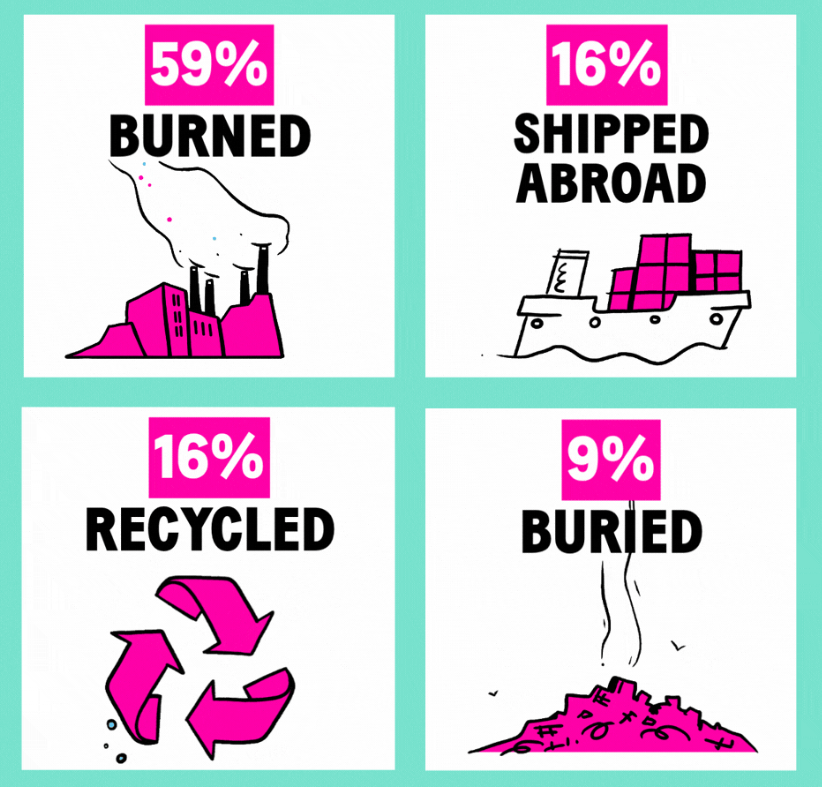
In The Big Plastic Count 2026 – the UK’s latest and largest household plastic waste survey – it was estimated that households throw away 82 billion pieces of plastic packaging every year, with just 16% recycled, while 59% is burned, 16% is exported and 9% goes to landfill.
The first Big Plastic Count in 2022 in the UK, with about 250,000 people participating, had these results:
-
- 96.6 billion pieces of plastic packaging waste a year, with
- 12% recycled in the UK
- 17% exported to other countries
- 25% buried in a landfill
- 45% burnt in incinerators.
The 2024 results, with about 234,000 people are:
-
- 90 billion pieces of plastic packaging waste a year, with
- 17% recycled in the UK
- 14% exported to other countries
- 11% buried in a landfill
- 58% burnt in incinerators.
Overall, there seems to be about 14 billion fewer pieces of plastic used in the UK at the time of this year’s count. Recycling is down from 2024 but up from 2022. Exporting is up from 2024 but down from 2022; and landfill use is significantly down, dropping from 25% in 2022 to 9% in 2026. Sadly, burning plastic is up in both 2024 and 2026, from 45% to 59%.
This is despite the UK introducing several measures to reduce plastic use and pollution, including:
-
- Banned in England since October 2023: single-use plastic drinks stirrers, balloon sticks and cutlery, plus food and drink containers made from expanded or extruded polystyrene.
- Banned in England and Scotland since 2018: rinse-off cosmetics and products, including scrubs, soaps, toothpastes and shower gels containing plastic microbeads.
- Plastic Packaging Tax since 2021: manufacturers and importers of finished plastic packaging must pay tax on packaging containing less than 30% recycled plastic.
- Mandatory charge for single-use carrier bags in England: introduced at 5p in 2015 and increased to a minimum of 10p in 2021, resulting in a 95% reduction in single-use plastic bag sales at major supermarkets since the charge was introduced.
These high-profile laws have raised awareness and changed UK shopper behaviour, with people repeatedly reaching for their ‘bags for life’, rather than buying single-use bags at the till, carrying reusable water bottles and choosing personal care refill options.
So, what’s the residual plastic problem? According to Everyday Plastic, it is the continued, unnecessary production of plastic in the first place, as recycling simply cannot keep pace with the volume being produced. Based on the findings of The Big Plastic Count 2026, the organisation is calling for policies, including removing plastic packaging from uncut fruit and vegetables, stopping the construction of new waste incinerators, and ending UK plastic waste exports.
More information can be found through the links if you’d like to raise any points and learnings with local representatives in your State. Also, check out our How Can We Avoid Those Harmful Microplastics post to protect yourself.
Paula Cooper is a Sea Us Rise founding board member. She and her family moved back to the UK from St. Pete a few years ago. Paula was known in her local supermarket store as the ’no plastic, please’ lady.
“Back home, it was standard to bring our own bags and boxes when shopping, so I did the same when we moved to the USA. Even when I specifically asked for ‘no plastic, please’ and handed over my reusable bags, fish and meat were automatically wrapped in single-use bags, while wine was ‘double-bagged’ without a second thought. I would politely remove the bags and hand them back to the packer.
As a client, I found this cultural difference both fascinating and horrifying, especially because customer service elsewhere in the USA was fantastic. It felt like being in a restaurant, explicitly saying you didn’t want bread, and then having plate after plate of it brought to your table anyway. After four years, they finally got to know me and my ‘quirky’ request—but it was an unexpected uphill battle.”
Is there an American version of the Big Plastic Count? Unfortunately, there isn’t, though some smaller versions happen around the US. Boulder, Colorado, held it’s second one this year. Maybe we can figure out how to do one locally.
Image from The Big Plastic Count website.